|
Nilorea Library
C utilities for networking, threading, graphics
|
|
Nilorea Library
C utilities for networking, threading, graphics
|
Pure, strict, bounded parser for an HTTP/1.1 request head. More...
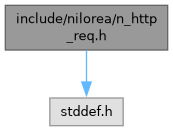
#include <stddef.h>Go to the source code of this file.
Data Structures | |
| struct | n_http_request |
| A parsed request head. More... | |
Macros | |
| #define | N_HTTP_REQ_AUTH_MAX 256u |
| Longest captured Authorization header value. | |
| #define | N_HTTP_REQ_BODY_MAX (1024u * 1024u) |
| Maximum declared Content-Length (body size), in bytes. | |
| #define | N_HTTP_REQ_HEAD_MAX 16384u |
| Largest request head (request line + headers, through CRLFCRLF) accepted. | |
| #define | N_HTTP_REQ_HEADERS_MAX 64u |
| Maximum number of header lines. | |
| #define | N_HTTP_REQ_PATH_MAX 2048u |
| Longest origin-form request target ('/'-prefixed, query included). | |
Enumerations | |
| enum | n_http_req_method { N_HTTP_REQ_GET = 0 , N_HTTP_REQ_POST = 1 } |
| The methods accepted. More... | |
| enum | n_http_req_status { N_HTTP_REQ_OK = 0 , N_HTTP_REQ_INCOMPLETE = 1 , N_HTTP_REQ_ERROR = 2 } |
| Result of n_http_request_parse. More... | |
Functions | |
| n_http_req_status | n_http_request_parse (const char *buf, size_t len, n_http_request *out) |
| parse an HTTP/1.1 request head from [buf, buf+len) | |
Pure, strict, bounded parser for an HTTP/1.1 request head.
A small, hardened scanner – not a general HTTP implementation – for the request line + headers a browser / REST client sends, meant for a server that sniffed a "GET " / "POST " on a connection and needs the head before routing.
It faces hostile network input, so it is deliberately narrow: only GET and POST, only origin-form targets ("/path?query"), only HTTP/1.0 or 1.1, Content-Length only – no chunked transfer encoding – with the target, header count and declared body all bounded before use, and a duplicate Content-Length or any Transfer-Encoding header rejected to foreclose request smuggling. No sockets, no allocation, never over-reads its buffer. The OK / INCOMPLETE / ERROR split lets a transport read incrementally.
Definition in file n_http_req.h.
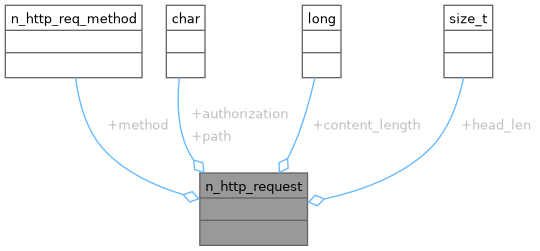
| struct n_http_request |
A parsed request head.
path is the origin-form target (leading '/', query included, fragment rejected). content_length is the declared body length (0 when there is no Content-Length header). head_len is the byte offset just past the terminating CRLFCRLF – where the body begins in the caller's buffer. authorization is the Authorization header value, empty if absent; an over-long value errors the whole request rather than truncating.
Definition at line 68 of file n_http_req.h.
| Data Fields | ||
|---|---|---|
| char | authorization[256u+1] | |
| long long | content_length | |
| size_t | head_len | |
| n_http_req_method | method | |
| char | path[2048u+1] | |
| #define N_HTTP_REQ_AUTH_MAX 256u |
Longest captured Authorization header value.
Definition at line 54 of file n_http_req.h.
Referenced by n_http_request_parse().
| #define N_HTTP_REQ_BODY_MAX (1024u * 1024u) |
Maximum declared Content-Length (body size), in bytes.
Definition at line 52 of file n_http_req.h.
Referenced by parse_body_len().
| #define N_HTTP_REQ_HEAD_MAX 16384u |
Largest request head (request line + headers, through CRLFCRLF) accepted.
Definition at line 46 of file n_http_req.h.
Referenced by n_http_request_parse().
| #define N_HTTP_REQ_HEADERS_MAX 64u |
Maximum number of header lines.
Definition at line 50 of file n_http_req.h.
Referenced by n_http_request_parse().
| #define N_HTTP_REQ_PATH_MAX 2048u |
Longest origin-form request target ('/'-prefixed, query included).
Definition at line 48 of file n_http_req.h.
Referenced by n_http_request_parse().
| enum n_http_req_method |
The methods accepted.
Append-only.
| Enumerator | |
|---|---|
| N_HTTP_REQ_GET | |
| N_HTTP_REQ_POST | |
Definition at line 57 of file n_http_req.h.
| enum n_http_req_status |
Result of n_http_request_parse.
The INCOMPLETE / ERROR split lets a transport read incrementally: keep buffering on INCOMPLETE, close on ERROR.
| Enumerator | |
|---|---|
| N_HTTP_REQ_OK | a complete, valid head was parsed |
| N_HTTP_REQ_INCOMPLETE | no CRLFCRLF yet, still under the cap |
| N_HTTP_REQ_ERROR | malformed / oversized / unsupported |
Definition at line 78 of file n_http_req.h.
| n_http_req_status n_http_request_parse | ( | const char * | buf, |
| size_t | len, | ||
| n_http_request * | out ) |
parse an HTTP/1.1 request head from [buf, buf+len)
Returns N_HTTP_REQ_OK only when a complete head (through CRLFCRLF) is present and every rule holds: the method is GET or POST; the target is origin-form ('/'-prefixed, no spaces or control bytes, no fragment, within N_HTTP_REQ_PATH_MAX); the version is HTTP/1.0 or 1.1; at most N_HTTP_REQ_HEADERS_MAX headers; no Transfer-Encoding; at most one Content-Length, a valid non-negative integer within N_HTTP_REQ_BODY_MAX. On OK, out is filled and out->head_len marks the body start.
Returns N_HTTP_REQ_INCOMPLETE when no CRLFCRLF has arrived yet and the buffered bytes are still under N_HTTP_REQ_HEAD_MAX (read more), and N_HTTP_REQ_ERROR for anything malformed, unsupported, or over the head cap. Bounded and over-read safe on every path.
| buf | the received bytes (may be NULL) |
| len | number of bytes in buf |
| out | the request head to fill (zeroed first) |
Definition at line 83 of file n_http_req.c.
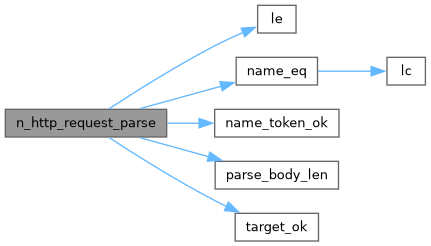
References n_http_request::authorization, n_http_request::content_length, n_http_request::head_len, le(), n_http_request::method, N_HTTP_REQ_AUTH_MAX, N_HTTP_REQ_ERROR, N_HTTP_REQ_GET, N_HTTP_REQ_HEAD_MAX, N_HTTP_REQ_HEADERS_MAX, N_HTTP_REQ_INCOMPLETE, N_HTTP_REQ_OK, N_HTTP_REQ_PATH_MAX, N_HTTP_REQ_POST, name_eq(), name_token_ok(), parse_body_len(), n_http_request::path, and target_ok().
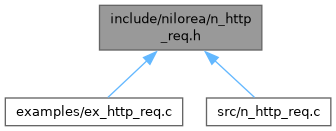
Referenced by main(), and parse().
 1.15.0