|
Nilorea Library
C utilities for networking, threading, graphics
|
|
Nilorea Library
C utilities for networking, threading, graphics
|
Greedy word-wrap over pre-measured, styled items. More...
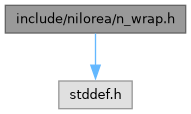
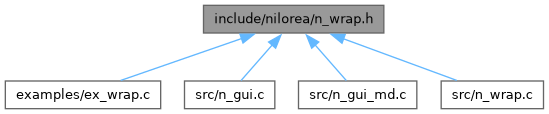
#include <stddef.h>Go to the source code of this file.
Data Structures | |
| struct | n_wrap_item |
One pre-measured layout item: a glyph, an emoji cell, an inline image, or a whole word, the wrap only ever looks at width and flags. More... | |
Macros | |
| #define | N_WRAP_NEWLINE (1u << 1) |
| the item is a hard line break; it ends the line and occupies no cell | |
| #define | N_WRAP_SPACE (1u << 0) |
| the item is a legal break point (typically a space); it is DROPPED when a line breaks there, appearing on neither line | |
Typedefs | |
| typedef void(* | n_wrap_emit) (size_t first, size_t last, size_t line, double width, void *user) |
| Called once per laid-out line, in order. | |
| typedef void(* | n_wrap_rect_emit) (size_t line, double x0, double x1, void *user) |
| Called once per line that a span covers, by n_wrap_span_rects(). | |
Functions | |
| size_t | n_wrap_index_at (const n_wrap_item *items, size_t count, double max_width, double line_height, double x, double y) |
| The item boundary nearest a point: the inverse of n_wrap_layout(), for turning a click or a drag into a caret or a selection end. | |
| size_t | n_wrap_layout (const n_wrap_item *items, size_t count, double max_width, n_wrap_emit emit, void *user) |
Break items into lines no wider than max_width. | |
| size_t | n_wrap_span_rects (const n_wrap_item *items, size_t count, double max_width, size_t lo, size_t hi, n_wrap_rect_emit emit, void *user) |
The rectangles that cover the items [lo, hi): one per line the range touches, in order, for painting a selection highlight. | |
Greedy word-wrap over pre-measured, styled items.
The line-breaking half of laying out styled text, with the measuring half left to the caller. A caller turns its text into an array of items that each carry only a width and two flags, and this decides where the lines break. Because an item is just a width, the same wrap serves a glyph, an inline image, an emoji cell or a whole word, in any mix of fonts and styles, the module never sees a font, a glyph or a renderer.
Why it is one function rather than two. A measure pass and a draw pass that walk separately drift, and a height cache built on the measure pass then disagrees with what is drawn. Here the measure pass IS the draw pass with emit set to NULL: the same code decides the breaks either way, so the height a caller caches and the lines it later paints cannot diverge.
Algorithm: greedy, breaking at the last legal break point (an N_WRAP_SPACE item) that fits, or mid-run when there is none. Rules worth knowing before you rely on them:
max_width** is placed alone on its own line rather than looping forever. Nothing is ever discarded to make text fit.Definition in file n_wrap.h.
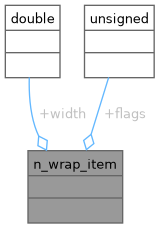
| struct n_wrap_item |
One pre-measured layout item: a glyph, an emoji cell, an inline image, or a whole word, the wrap only ever looks at width and flags.
| Data Fields | ||
|---|---|---|
| unsigned int | flags | N_WRAP_SPACE / N_WRAP_NEWLINE, or 0 |
| double | width | advance width in the caller's units (pixels, columns, ...) |
| #define N_WRAP_NEWLINE (1u << 1) |
the item is a hard line break; it ends the line and occupies no cell
Definition at line 72 of file n_wrap.h.
Referenced by _wrap_words(), _wrap_words_emit(), main(), md_wrap_of(), and n_wrap_layout().
| #define N_WRAP_SPACE (1u << 0) |
the item is a legal break point (typically a space); it is DROPPED when a line breaks there, appearing on neither line
Definition at line 70 of file n_wrap.h.
Referenced by _wrap_words(), main(), md_wrap_of(), and n_wrap_layout().
Called once per laid-out line, in order.
| first | index of the line's first item |
| last | index ONE PAST its last item (so the range is [first, last) and an empty line has first == last) |
| line | zero-based line number |
| width | summed width of the items in the range, for centring / right alignment / a selection rectangle |
| user | the caller's cookie, passed through untouched |
| typedef void(* n_wrap_rect_emit) (size_t line, double x0, double x1, void *user) |
Called once per line that a span covers, by n_wrap_span_rects().
| line | zero-based line number (its top is line * line_height) |
| x0 | left edge of the covered part, from the line's start |
| x1 | right edge (x1 > x0) |
| user | the caller's cookie |
| size_t n_wrap_index_at | ( | const n_wrap_item * | items, |
| size_t | count, | ||
| double | max_width, | ||
| double | line_height, | ||
| double | x, | ||
| double | y ) |
The item boundary nearest a point: the inverse of n_wrap_layout(), for turning a click or a drag into a caret or a selection end.
The point is in the laid-out text's own coordinates (0,0 = the first line's top-left), with every line line_height tall. The layout is the one n_wrap_layout() produces for the same items and max_width, so a hit can never disagree with what was drawn.
Within a line, a point on the left half of an item resolves to the boundary before it and on the right half to the boundary after it, so an atomic item (an emoji cell, an inline image) is selected whole or not at all. A point past a line's end resolves to that line's end; above the first line to 0; below the last line to count.
| items | the items given to n_wrap_layout(); may be NULL if count is 0 |
| count | number of items |
| max_width | the width they were wrapped to |
| line_height | height of one line; a value <= 0 resolves every point to the first line |
| x | point, from the left edge |
| y | point, from the top edge |
Definition at line 176 of file n_wrap.c.
References wrap_hit::found, wrap_hit::items, n_wrap_layout(), wrap_hit::result, wrap_hit::want, wrap_hit_line(), and wrap_hit::x.
Referenced by main().
| size_t n_wrap_layout | ( | const n_wrap_item * | items, |
| size_t | count, | ||
| double | max_width, | ||
| n_wrap_emit | emit, | ||
| void * | user ) |
Break items into lines no wider than max_width.
Greedy: each line takes as much as fits, breaking at the last N_WRAP_SPACE that fits or, when the line holds no space, immediately before the item that overflows. An item that cannot fit even alone is placed alone rather than looping.
| items | pre-measured items; may be NULL when count is 0 |
| count | number of items |
| max_width | the width to wrap to; a value <= 0 puts every non-empty line on its own item, since nothing but the first item of a line can ever fit |
| emit | called once per line, or NULL to only count lines (the measure pass, same breaks, no output) |
| user | cookie handed back to emit |
Definition at line 50 of file n_wrap.c.
References n_wrap_item::flags, N_WRAP_NEWLINE, N_WRAP_SPACE, n_wrap_item::width, and WRAP_NO_SPACE.
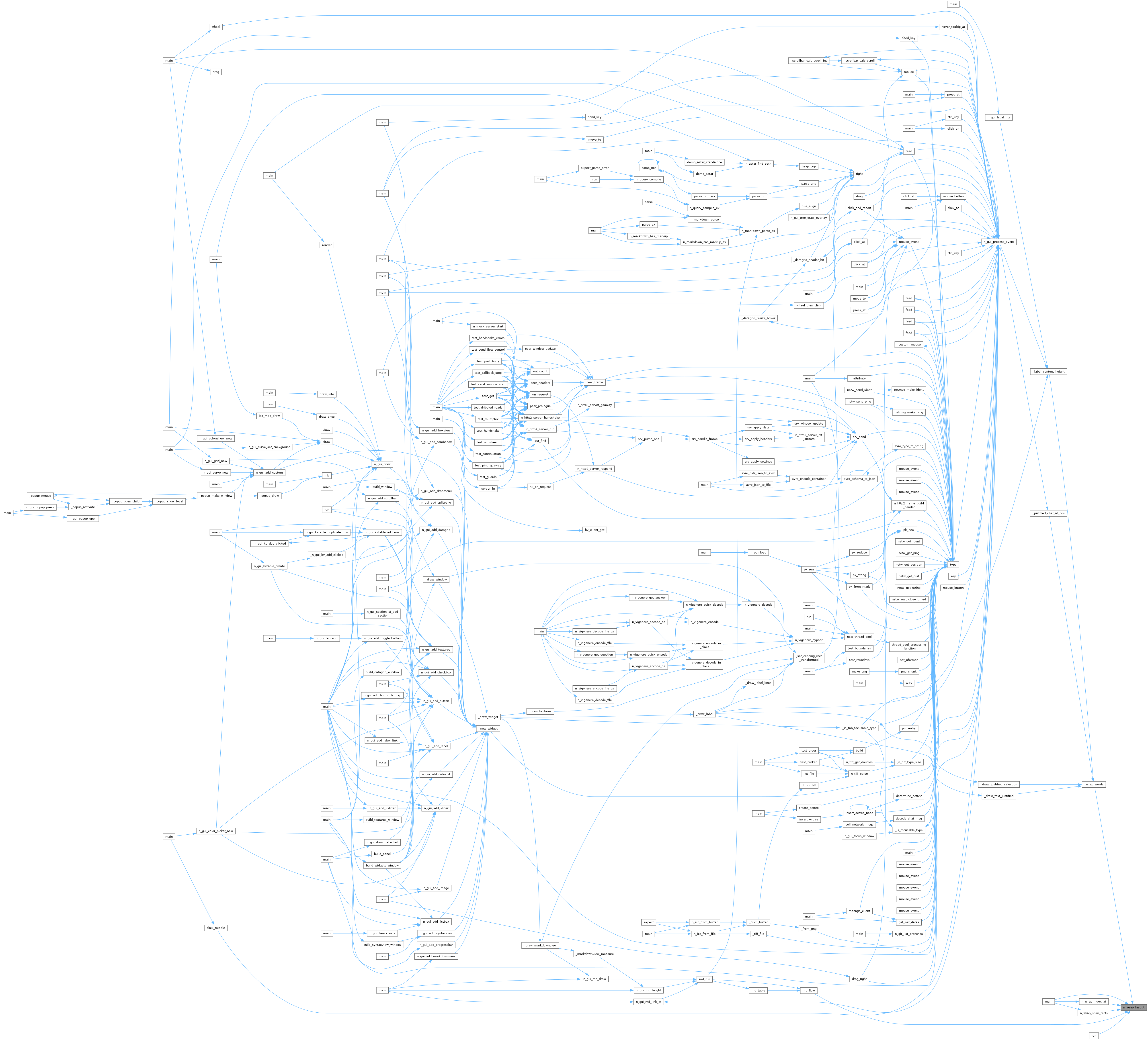
Referenced by _wrap_words(), main(), md_flow(), n_wrap_index_at(), n_wrap_span_rects(), and run().
| size_t n_wrap_span_rects | ( | const n_wrap_item * | items, |
| size_t | count, | ||
| double | max_width, | ||
| size_t | lo, | ||
| size_t | hi, | ||
| n_wrap_rect_emit | emit, | ||
| void * | user ) |
The rectangles that cover the items [lo, hi): one per line the range touches, in order, for painting a selection highlight.
Uses the same layout as n_wrap_layout(), so the rectangles sit exactly under the drawn items. A space dropped at a line break belongs to no line and so lies under no rectangle; a line whose covered part has zero width (only a hard break) emits nothing. lo and hi may come in either order.
| items | the items given to n_wrap_layout() |
| count | number of items |
| max_width | the width they were wrapped to |
| lo | first boundary of the span |
| hi | other boundary (clamped to count) |
| emit | called once per covered line; may be NULL to only count |
| user | cookie handed back to emit |
Definition at line 249 of file n_wrap.c.
References wrap_span::emit, wrap_span::hi, wrap_span::items, wrap_span::lo, wrap_span::n, n_wrap_layout(), wrap_span::user, and wrap_span_line().
Referenced by main().
 1.15.0